AMO Calls for Bill 100 Reversal; Build Communities Strong: New Stream Launches; New IESO Process for Major Projects; and Various ERO Submissions
Top Insights
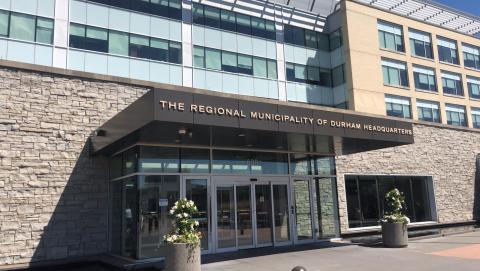
- AMO calls for the province to restore local voice and keep local governance accountable to the communities they serve by reversing the appointment of Regional Chairs through Bill 100, Better Regional Governance Act
- Federal government launches new Local Impact Stream providing up to $1 million for community infrastructure projects
- IESO launches a new process to identify major projects and facilitate collaboration between stakeholders, including municipalities, to plan for future factual energy demand
- AMO welcomes the province’s proposed new framework for e-bike classification, which will help address public safety and municipal liability challenges
- The province has proposed changes to landfill requirements that reflect AMO advocacy calling for a balance between approvals speed and protections
- AMO has made recommendations to the province on its proposed regulatory framework for municipal consent of communal water and wastewater systems
AMO Opposes Appointment of Regional Chairs, Calls for Reversal of Bill 100
Bill 100, the Better Regional Governance Act, 2026 was passed on May 7. AMO has sent a letter to the province opposing the government’s decision to move forward with the appointment of regional chairs, the Warden of Simcoe County, and the Chair of Muskoka District. Municipal leaders should be elected by, and accountable to local voters – not Queen’s Park. AMO calls on the province to restore the balance of local governance by reversing Bill 100 and maintaining the democratic election of heads of council.
The appointment of regional chairs with “strong chair” powers is fundamentally undemocratic. It erodes accountability to voters, undermines the ability of councils to represent the interests of their residents, move forward on local priorities, and deliver effective services. The selection of heads of council should be kept local. This is key to ensuring:
- Regional chairs have a strong, local mandate to deliver local priorities and drive growth
- Residents can hold elected officials to account and elect people who care about their priorities
- Unelected appointees cannot overturn decisions made by democratically-elected council members
- Regional chairs have a deep understanding of how municipal government works, and are able to build consensus, trust and buy-in at Council and in the community to advance shared local goals
Local Impact Stream of the Build Communities Strong Fund
The federal government has announced a new $1 billion national Local Impact Stream allocating funding from the Build Communities Strong Fund towards community infrastructure. Municipalities can apply for up to $1 million to build or improve community infrastructure that is primarily for public use and/or benefit. This includes community buildings, recreation and sport facilities, parks, and cultural infrastructure.
The Local Impact Stream will be administered by Canada’s regional development agencies – FedDev Ontario for southern Ontario, and FedNor for Northern Ontario. Applications are now open for the first intake with an initial deadline of July 8 for Northern Ontario, and July 9 in Southern Ontario.
AMO is hosting a joint webinar with FedDev Ontario on June 24 explaining the eligibility criteria, funding details, and how to prepare a strong application. Register now over Zoom.
IESO Launches new Major Project Identification Committee Process
The Independent Electricity System Operator (IESO) has established a new Major Projects Identification Committee (MPIC) process intended to serve as an early warning system for identifying large projects that could drive significant new demand for electricity (e.g. manufacturing facilities, mines, housing developments, data centres). MPICs will not replace existing energy planning, grid connection or local development processes, but are intended to help identify major projects earlier, and facilitate planning between the IESO, municipalities, Indigenous communities, and stakeholders.
When projects are identified, municipalities will be invited to participate in a voluntary process along with relevant partners and authorities. The intent is to provide all stakeholders with a structured approach to coordinating growth and electricity demand planning. For more information about MPICs, please contact majorprojects@ieso.ca.
AMO Comments on Proposed E-Bike Framework
AMO submitted comments on the Ministry of Transportation’s proposal to modernize Ontario’s framework for power-assisted bicycles (e-bikes). AMO supports the province’s proposed approach as a way to introduce more standardized safety and usage requirements for e-bikes across the province. AMO’s submission emphasized that any new framework should preserve municipal authority to determine where different e-bike classes are permitted based on local infrastructure, transportation networks, and community safety needs.
The submission also highlighted the need for province-wide direction on enforcement roles, lithium-ion battery safety, public education, and compliance, including clear guidance for local police services, municipalities, manufacturers, retailers, and users. AMO welcomes the proposed 12-month education and awareness period included as part of the proposed framework and looks forward to working with the province to implement a framework that balances innovation with public safety, municipal liability considerations, and local decision-making.
AMO Comments on Proposal to Streamline Landfill Requirements
AMO submitted comments to the Ministry of the Environment, Conservation and Parks on the province’s proposal to streamline approval requirements for changes to waste disposal site service areas and fill rates. AMO and the municipal sector are broadly supportive of the proposed changes that would reduce duplicative processes and increase site flexibility, while still ensuring that appropriate environmental controls and oversight remain in place. In the past, AMO has advocated for a balanced approach that would empower municipalities and the province to protect the environment and community well-being while taking decisive action to expand landfill capacity in Ontario. We are pleased to see the province has incorporated these recommendations into this proposal.
AMO Comments on a Regulatory Framework for Communal Water and Wastewater Systems
AMO has submitted comments to the Ministry of Municipal Affairs and Housing on its proposal to establish a regulatory framework for municipal consent of communal water and wastewater systems. To be successful, AMO advised advancing clear regulations and governance requirements that do not undermine municipal fiscal health or the integrity of Official and capital plans. AMO's recommendations included:
- Establishing clear definitions for the types of systems subject to the framework
- Maintaining a level regulatory playing field between private communal and municipally-owned systems
- Ensuring the development of communal systems is aligned with long-term settlement patterns, servicing strategies, and infrastructure capacity
- Clearly defining the roles and responsibilities of municipalities and the province in the event of system failure, and adopting a one-window model for provincial approvals and oversight
We will monitor next steps and share feedback with the province to help ensure any future regulations deliver a clear, consistent, and fiscally sustainable framework.