Key Takeaways From The 2026 AMO Conference
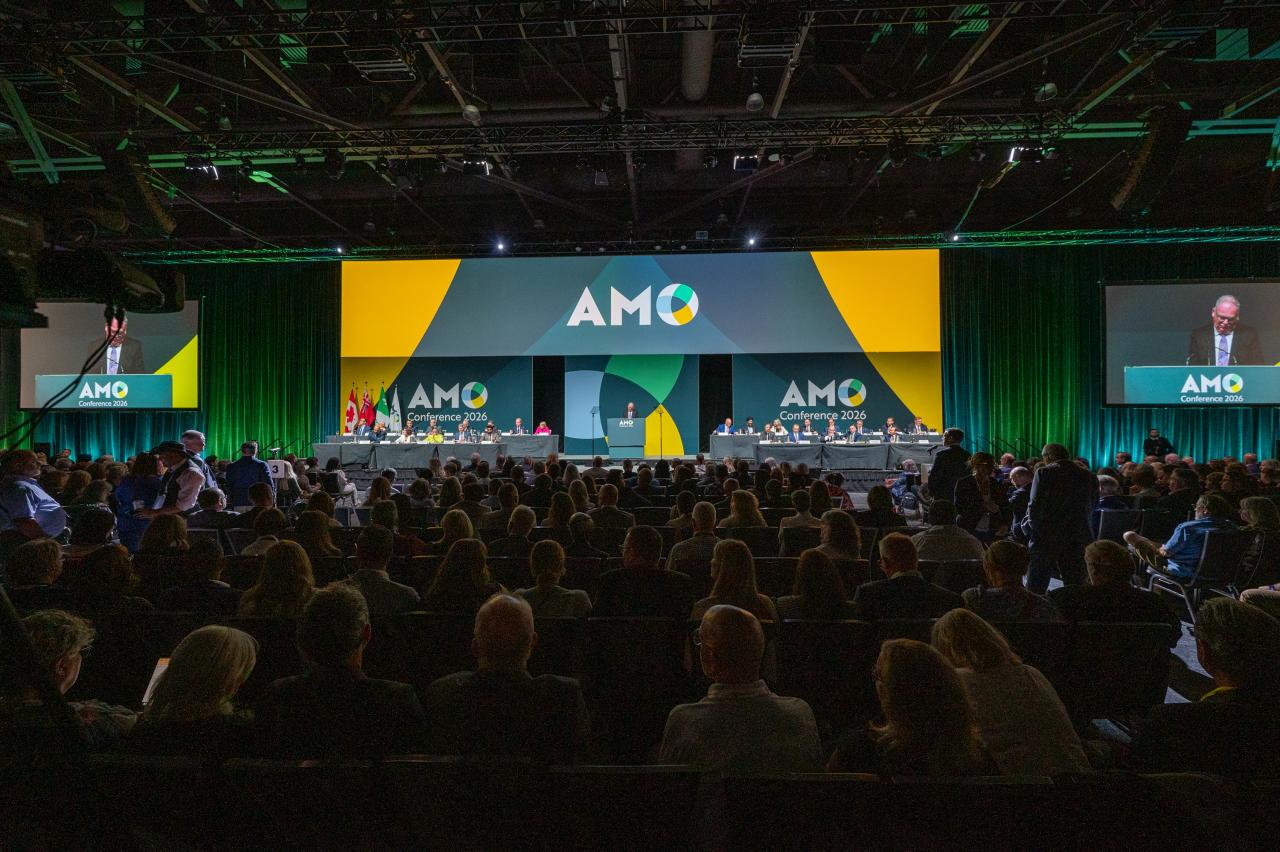
The 2026 AMO Conference brought together more than 3,600 municipal leaders, provincial and federal representatives, sector partners and stakeholders representing 444 municipalities across Ontario.
Over four days, municipal leaders advanced local priorities through over 750 delegation meetings, policy discussions and conversations with government and sector partners. Several significant announcements and developments also emerged from the conference.
Infrastructure funding for growth and renewal
The conference opened with a joint federal-provincial announcement of $1 billion in combined funding through a new Canada–Ontario Partnership to Build funding stream.
The program is intended to support municipalities that do not levy development charges, often rural, small and northern communities, with funding available for both growth-related housing infrastructure and asset renewal. AMO and the Ministry of Infrastructure will be co-hosting webinars to answer your questions, and additional details will be provided in next week’s policy update.
Municipalities that applied for the Development Charge Reduction Program (DCRP) have started to hear back from the provincial government. Some municipalities are receiving responses to their applications and will need to assess next steps. AMO's position continues to be that if a municipality receives less funding than it requested, it should have the flexibility to reduce the size of its development charge reduction.
Questions about the interaction between the DCRP and the Non-Development Charge Municipalities Stream funding, including if a municipality can be eligible under both, should be directed to the province.
Community Sport and Recreation Infrastructure Fund
The province announced that applications are now open for the next round of the $500-million Community Sport and Recreation Infrastructure Fund (CSRIF). The fund is intended to support the development and renewal of local sport and recreation infrastructure across Ontario. The Ministry is hosting a webinar on August 26 at 11 a.m. to learn about the fund and application process.
Municipal Accountability Act consultations
The province also launched consultations on proposed regulations to implement the new municipal code of conduct legislation passed earlier this year. The proposed regulatory framework includes:
- potential elements of a standard municipal code of conduct
- processes for municipal Integrity Commissioners
- and education and training requirements for municipal officials and Integrity Commissioners.
AMO will provide formal comments and create additional channels for you to have your say. Stay tuned for more to come.
Housing, homelessness and local democracy
Housing affordability, homelessness and supportive housing remained key issues throughout the conference. Discussions focused on the need for stronger coordination among governments, health and housing providers, and the non-profit, co-operative and private sectors to address growing pressures in communities. All three levels of government need to act now to address the waitlist for voluntary treatment, wraparound supports, and supportive housing would make real progress on this important issue.
Delegates also examined local democracy and governance, including how municipalities can navigate changes while maintaining transparent, accountable decision-making and strong local voices.
New AMO leadership
AMO members elected Riley Brockington as President for the 2026–2028 term, alongside a new Board of Directors. The incoming Board will continue AMO’s advocacy on the issues affecting municipalities and the sustainability of local government.
Advancing reconciliation
AMO and the Anishinabek Nation signed a Memorandum of Understanding establishing a framework to identify shared priorities, exchange perspectives and work together to advance common goals through advocacy and sector leadership. The MOU is one of the commitments identified in AMO’s Indigenous Reconciliation Action Plan.
The conference reinforced the scale and complexity of the pressures facing municipalities. AMO will continue working with members and government partners to advance solutions that support strong, sustainable and resilient communities.